Services

Diagnostic Services

Engaged when systems are failing, vendors are pointing fingers, and departments are shifting blame. Four decades of resolving disputed truth — producing fast, defensible technical findings for executive leadership.

Hop Starvation Security Assessment

Firewalls control access. Hop starvation controls distance. This is expert consulting work — not a software product, not a license, not an appliance. The deliverable is an assessment, findings, and actionable recommendations.

Hop Starvation

What It Is

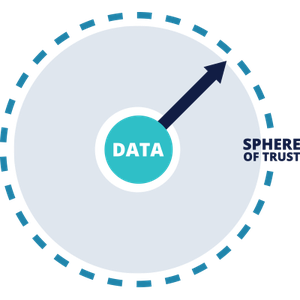
Bill personally analyzes your network's actual data travel patterns using deep packet inspection — Wireshark, protocol analysis, and manual packet capture methods refined over four decades. He shows you where your data goes, how many hops, to what countries. Then he recommends hop limits to contain sensitive data and prevent exfiltration before it happens.

The methodology is based on two granted US patents (2020, 2022). It uses TTL/hop count analysis to create invisible security perimeters at the network layer. No software to install. No product to license. Bill uses manual methods and his unmatched protocol expertise to produce findings your team can act on.

What You Get

  • DataTravel analysis showing exactly where your data travels
  • Hop count mapping — how far your data goes and through which networks
  • Country-level data movement visibility
  • Hop limit recommendations to contain sensitive data
  • Implementation guidance your team can execute
  • Findings suitable for executive, legal, audit, and compliance review

Who It's For

Enterprises with high-value data under regulatory or fiduciary obligation:

  • PII and financial data (PCI-DSS compliance)
  • Protected health information (HIPAA)
  • EU personal data (GDPR)
  • Trade secrets and intellectual property
  • SOC 2 environments requiring data flow documentation
  • Any organization that needs to prove where its data does — and doesn't — go

Why Only Bill Can Do This

He invented the methodology. He holds the patents. He has four decades of packet-level expertise — Pentagon, military, stock exchanges, Fortune 100. No one else offers this service because no one else has the combination of the patented approach and the diagnostic depth to execute it.

Vint Cerf — the father of the internet — called the approach "clever."

Request an Assessment Typically begins with a scoping call to understand your environment and data sensitivity.

Zero-Day Prevention Consulting

Proactive strategy, not reactive response. Advisory services built on real-world breach research and four decades of watching attacks at the packet level.

Strategic Advisory

Proactive security posture assessment. Identify architectural weaknesses before they become incidents. Design systems that fail less often. The philosophy is to obviate — prevent problems, don't just react to them.

Breach Analysis

SolarWinds-style breach analysis and lessons learned. Bill authored a 46-page, 8-part analysis of the SolarWinds breach including actual packet analysis to the exfiltration server. That depth of research informs every advisory engagement.

Attack Surface Reduction

Data travel limits as a security layer. If your data can't reach an attacker's infrastructure, exfiltration fails regardless of what malware is present. Strategies derived from two US patents and real-world network behavior analysis.

Network Forensic Analysis

Deep packet analysis for incident investigation and root-cause resolution. The service that earned the reputation: "I have witnessed him solve issues that the big 5 couldn't even touch."

Incident Investigation

Deep packet analysis when you need to know exactly what happened, when, and how. Produces findings suitable for executive, legal, audit, and compliance review. Validates competing technical narratives using primary evidence.

Protocol-Level Diagnostics

TCP, QUIC, BGP, SSL/TLS — protocol-level expertise from the engineer who trained 3,500+ certified forensic technologists and wrote the reference guide. Diagnosing failures where documentation is missing, destroyed, or incorrect.

Network Security Audits

Wireshark-based network security audits. Packet capture and analysis at a level most teams don't have in-house. Root cause analysis under executive, legal, and regulatory pressure — the high-stakes situations where being right matters.

Square to Cube

The diagnostic framework behind every engagement. Applied at the Pentagon, in Iraq, on stock exchange floors, and across Fortune 100 networks.

The Problem

You Cannot Solve Today's Problem with Today's Information

Otherwise you would have solved it already. Most teams stay trapped in two dimensions — re-running the same diagnostics, reviewing the same logs, reaching the same dead ends.

The Shift

From Square to Cube

A "square" is the 2D view — current data, known symptoms, existing assumptions. A "cube" adds the missing dimension: deep packet capture, protocol-level inspection, and theory-based hypothesis testing. The root cause appears.

The Result

Defensible Technical Truth

Find the missing dimension. Test the hypothesis. Validate. Produce findings that hold up under executive, legal, and regulatory scrutiny. Design the system so it fails less often.

Keynotes, Panels & Advisory Boards

Available for conferences, panels, advisory boards, and executive briefings. Four decades of high-stakes case studies. No slides full of theory — real stories, real packets, real outcomes.

Topics

  • Data travel security and hop starvation methodology
  • Lessons from the SolarWinds breach (with packet-level evidence)
  • Pentagon 9/11 communications recovery
  • Military biometrics: diagnosing systems under wartime conditions
  • The "Square to Cube" diagnostic framework
  • Deep packet analysis for security and performance
  • Disaster recovery responder stories and lessons learned

Past Venues

  • SharkFest (keynote speaker)
  • Interop
  • InfraGard
  • ACP
  • ISSA chapters
  • Military cyber symposiums
  • Innotech
  • CA 2E/Plex Conference
  • Concordia University (guest presenter)

SolarWinds Breach Analysis

8-part, 46-page detailed analysis including actual packet analysis to the exfiltration server. Diagrams, tables, and expert analysis showing how data travel limits could have prevented one of the most significant breaches in history. Published on ResearchGate.