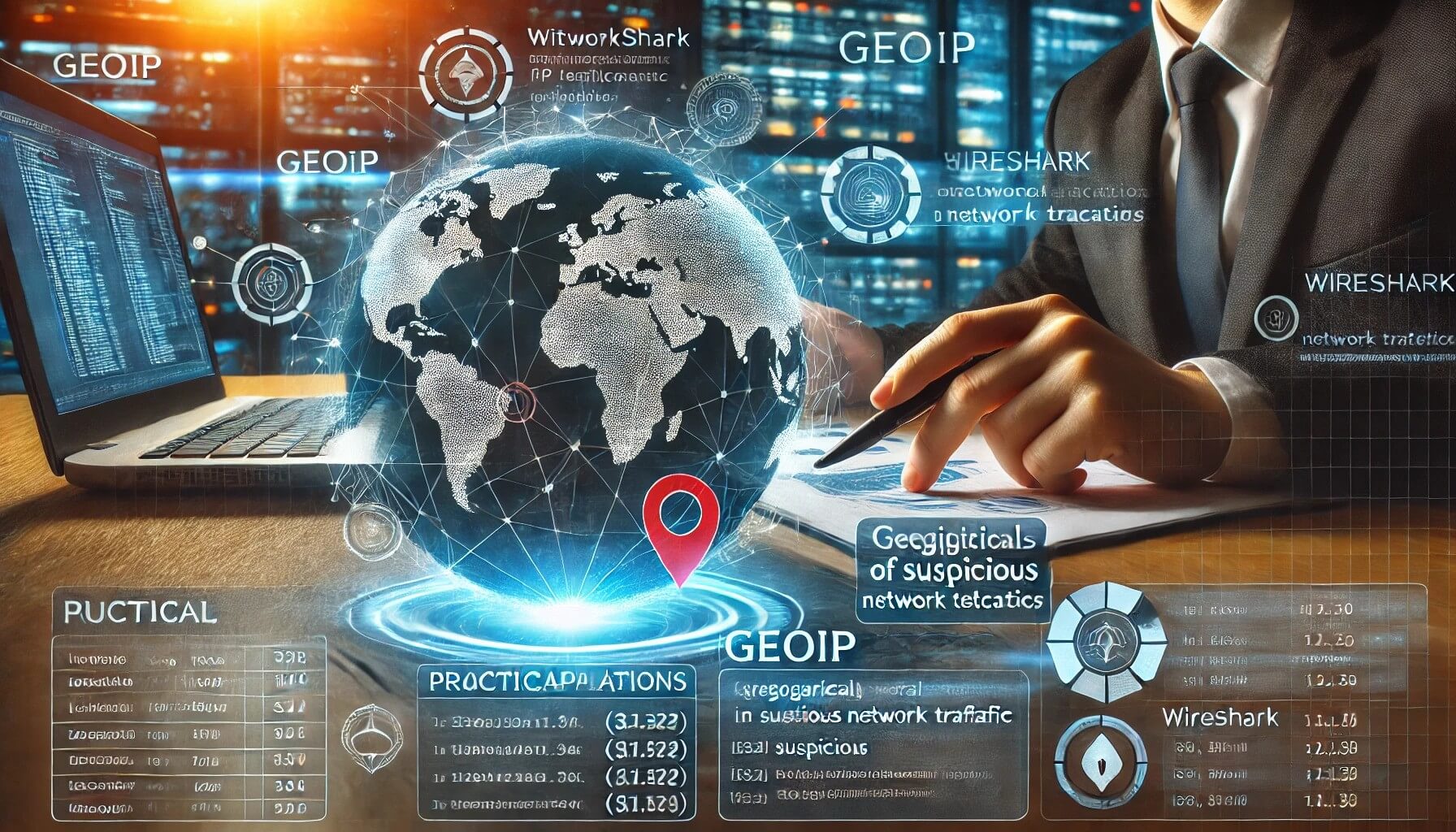
In today's rapidly evolving cybersecurity landscape, the ability to trace the origins of network traffic isn't just advantageous—it's indispensable. Imagine being able to pinpoint the exact geographical location of an IP address involved in suspicious activity or potential breaches. This capability is precisely what Wireshark's GeoIP feature offers, transforming how analysts investigate and respond to cybersecurity threats.
Understanding GeoIP Mapping with Wireshark
Wireshark, renowned for its robust packet analysis capabilities, elevates network traffic inspection with integrated GeoIP functionality. By harnessing GeoIP databases, Wireshark translates raw IP addresses into physical locations on a global map. This visualization provides a comprehensive view of where network traffic originates, offering critical insights into potential threats and anomalous activities.
Practical Applications in Cybersecurity
- Enhanced Threat Detection: Visualizing IP addresses on a map enables rapid identification of the geographic sources of suspicious activities. Analysts can swiftly respond and implement targeted mitigation strategies, minimizing potential damages.
- Network Forensics: During investigations, GeoIP mapping plays a pivotal role in reconstructing the sequence of events by plotting IP addresses involved in security incidents. It facilitates a clearer understanding of the scope and impact of breaches or unauthorized access attempts.
- Global Traffic Analysis: Monitoring global traffic patterns becomes intuitive with GeoIP. Analysts can detect anomalies or trends indicative of emerging threats or unusual network behavior, allowing proactive measures to be taken.
Real-World Scenarios
Consider conducting a comprehensive cybersecurity audit and discovering unusual traffic patterns in network logs. Leveraging Wireshark's GeoIP feature, you can visually trace the origins of these activities on a map. This capability enhances your investigative capabilities, enabling proactive measures to safeguard network infrastructure and sensitive data.
Best Practices and Considerations
While GeoIP mapping provides invaluable insights, it's crucial to approach its utilization with key considerations:
- Data Accuracy: Regularly update GeoIP databases from reputable sources like MaxMind to ensure precise location information, reflecting recent changes in IP address allocations.
- Privacy and Compliance: Adhere to privacy regulations and ethical guidelines when handling location-based data. Maintain compliance with organizational policies and legal requirements to protect individual privacy rights.
Unlocking Insights with Wireshark
Mastering Wireshark's GeoIP feature opens doors to deeper insights in network analysis and cybersecurity. Whether you're a seasoned cybersecurity professional or new to the field, integrating GeoIP mapping into your toolkit enhances your ability to understand, respond to, and mitigate cybersecurity threats effectively.
Conclusion
Wireshark's GeoIP feature isn't just a tool—it's a gateway to understanding the global footprint of network traffic. By visualizing IP addresses on a map, analysts gain clarity on the origins of network activities, enabling informed decisions and fortified defenses against cyber threats.
Stay tuned as we delve further into advanced techniques and practical applications of Wireshark, unraveling complexities in cybersecurity. Join us in mastering the art of network analysis and securing digital landscapes with precision and expertise.
GeoIP in the Era of Distributed AI Infrastructure
GeoIP mapping matters more now than at any point in network forensics history. AI training clusters, model serving infrastructure, and inference endpoints are distributed across data centers on every continent. When your organization's traffic flows to GPU farms in Singapore, model APIs in Northern Virginia, and fine-tuning services in the EU, knowing the geographic origin and destination of every connection is a first-order security question — not an optional enrichment step. Data sovereignty, regulatory compliance, and exposure to adversarial infrastructure all depend on understanding where your packets travel.
The same principle applies to crypto settlement networks, quantum key distribution nodes, and robotics command-and-control channels that increasingly share enterprise bandwidth. Geographic awareness turns raw traffic data into actionable intelligence. The Morpheus Cyber podcast examines how these convergence-era technologies reshape what network analysts need to know — and why GeoIP is no longer a nice-to-have feature.